
Upward Feedback: How to Evaluate Your Manager Professionally and Constructively (Examples & Templates)
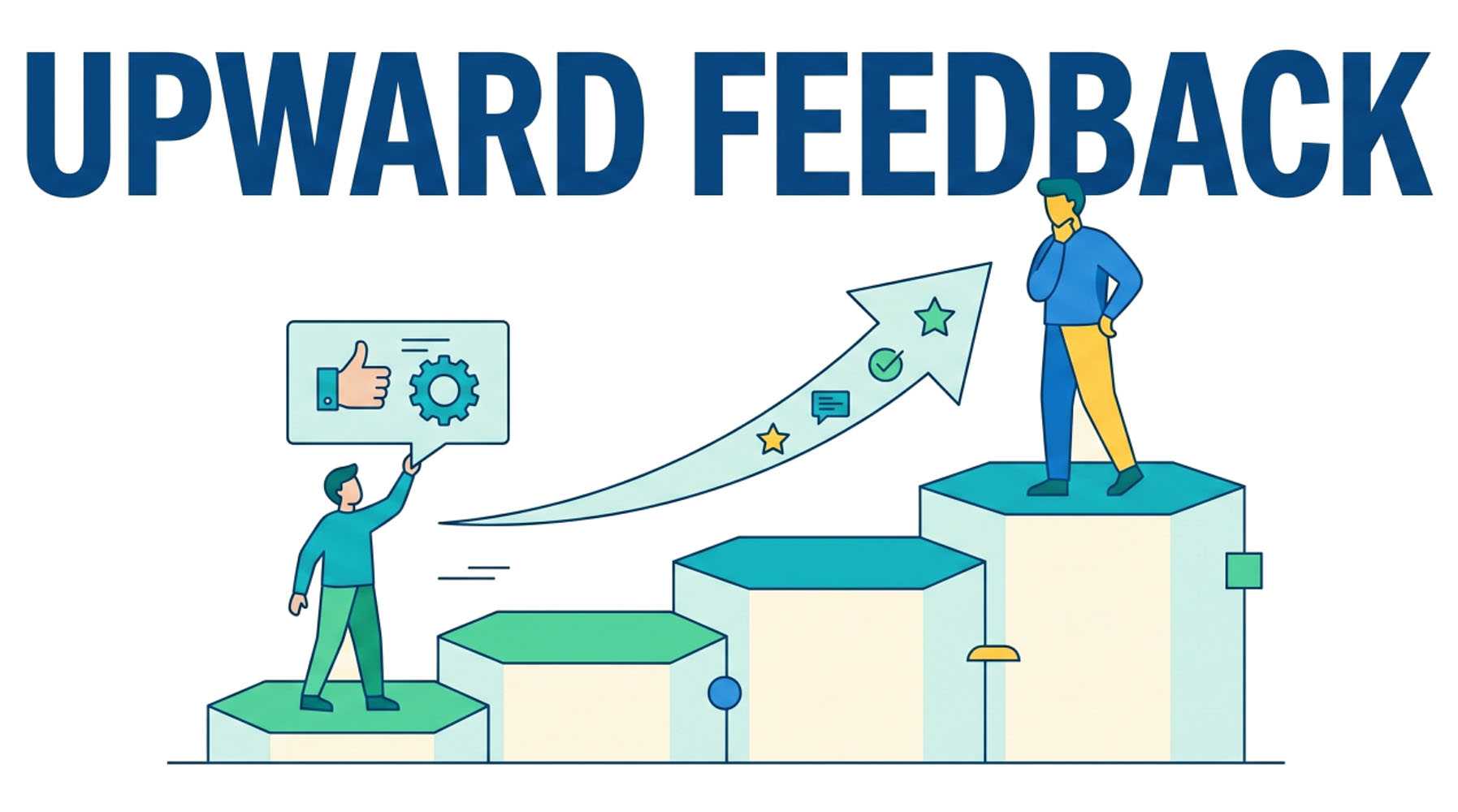
Learning how to give feedback to your boss is one of the fastest ways to improve your work life. Upward feedback is not about grading your manager or winning an argument. It is about sharing clear, specific observations that help your manager lead better and help you do your best work.
Most professionals avoid it. They worry about sounding disrespectful, damaging the relationship, or risking their career. When done professionally, constructive feedback to your manager does the opposite. It builds trust, reduces friction, and turns evaluation into partnership.
Why upward feedback matters more than ever
Managers shape your day-to-day experience more than any policy or perk. Gallup research consistently finds that managers account for 70% of the variance in team engagement. That means your manager’s communication, coaching, and decision-making directly affect retention, productivity, and wellbeing.
Yet only about one in three U.S. employees report being engaged at work, and global engagement remains low, as documented in Gallup’s latest workplace reports. One reason is the feedback gap. Managers rarely get honest, actionable input from the people they lead.
When you learn to evaluate your manager with evidence instead of emotion, you give them the data they need to adjust. You also protect your own performance, because clarity and support flow both ways.
What you will learn in this guide
This guide is built for individual contributors, senior specialists, and new leads who want a respectful, practical approach. You will learn when to give upward feedback, the five dimensions that matter most, and a step-by-step framework that keeps conversations safe and productive.
We will use proven models like SBI, Situation Behavior Impact, and templates used in 360 reviews at leading companies. You will see real scripts for common situations, from unclear priorities to micromanagement, plus three ready-to-use templates you can copy into your next 1:1.
By the end, you will know how to deliver feedback that is specific, balanced, and focused on outcomes, not personality.
What Is Upward Feedback and Why It Matters
Upward feedback is the practice of sharing constructive observations with the person who manages you. It is the reverse of downward feedback, where a manager evaluates an employee, and it complements peer feedback, where colleagues exchange input at the same level.
When you evaluate your manager professionally, you are not judging personality. You are describing specific behaviors and their impact on work. That distinction is what makes feedback to your boss useful instead of uncomfortable.
Upward, downward, and peer feedback compared
Downward feedback focuses on task execution and growth goals for an individual contributor. Peer feedback improves collaboration and handoffs. Upward feedback improves the conditions that allow both to succeed, such as clarity, prioritization, and support.
Think of it as closing the loop. Your manager makes dozens of decisions that affect your workload, focus, and development. Without your perspective, they are leading with incomplete data.
The business case for speaking up
Managers drive the majority of team engagement. Gallup has repeatedly found that managers account for about 70 percent of variance in how engaged a team feels. Engagement is not a soft metric. It predicts retention, productivity, customer ratings, and profitability.
Teams with high psychological safety, where people can give honest input without fear, learn faster and make fewer repeated mistakes. Upward feedback is a core safety behavior. It signals that problems can be named early, before they affect deadlines or morale.
For managers, this input is career fuel. Most companies promote strong individual contributors into management without formal training. Your specific, behavior-based feedback helps them calibrate faster than any annual survey.
Common fears and how to reframe them
Many employees hesitate to give feedback to their manager for three reasons: fear of retaliation, fear of being labeled negative, and uncertainty about how to phrase it.
Reframe risk into partnership. You are not criticizing authority. You are protecting shared outcomes. The most respected professionals are not the quietest. They are the clearest.
If you focus on observable actions, business impact, and a shared goal, you shift the conversation from judgment to improvement. That is the foundation of constructive feedback to your manager, and it is a skill senior leaders notice and reward.
When to Give Feedback to Your Manager
Timing determines whether upward feedback is heard or ignored. The best feedback to your boss is given when there is a clear purpose, recent evidence, and enough privacy for an honest conversation. Use both formal and informal moments, but choose deliberately.
Formal opportunities
These are built into most companies and create natural safety for evaluating your manager.
Performance reviews and 360 reviews. Prepare two to three specific observations tied to business outcomes. Use the SBI format to keep comments objective.
Engagement surveys. Add concise comments that explain ratings. Name one behavior to continue and one to adjust.
Skip-level meetings. Frame input as context for your work, not a complaint. Share what support you need from your direct manager to deliver results.
Informal opportunities
Frequent, small inputs prevent issues from building up.
Weekly 1:1s. Reserve the last five minutes for mutual feedback. Ask, can I share one observation that would help me move faster?
Project debriefs. After a launch or milestone, note what helped and what slowed the team. Focus on process, not personality.
Real-time coaching moments. When priorities shift, ask for clarification on the spot. A brief check prevents rework.
Reading timing and context
Choose moments when your manager can listen and act. Avoid high-stress windows like board prep or incident response unless the issue is blocking critical work.
Use this quick checklist before you speak up:
- You have a recent, specific example from the last two weeks
- You can describe the business impact in one sentence
- You have a constructive suggestion, not just a problem
- The setting is private and free from interruptions
- You are calm and focused on outcomes, not frustration
- Your intent is to improve shared results, not to vent
If three or more items are true, proceed. If not, collect more evidence or wait for a better window.
How often should you give upward feedback
Aim for small, regular inputs rather than a yearly download. For most roles, one meaningful observation per month in a 1:1 is sustainable. Pair it with recognition to keep the balance healthy. This cadence normalizes feedback and makes evaluation feel routine, not risky.
The 5 Core Dimensions to Evaluate Your Manager On
Effective upward feedback focuses on observable leadership behaviors, not personality. Use these five dimensions to organize your observations. They map directly to what drives engagement, delivery, and growth.
1. Communication and Clarity
Look for how information flows. Does your manager set clear goals, share context, and confirm understanding. Evaluate meeting cadence, written updates, and how changes are communicated. Strong signals include documented priorities, concise decisions, and early heads-up on shifts.
2. Coaching, Support, and Development
Assess how your manager helps you grow. Do you receive regular, actionable feedback. Are 1:1s consistent and focused on your development, not just status. Good coaching includes stretch assignments, timely recognition, and advocacy for resources or promotions.
3. Decision-Making and Prioritization
Track how choices get made. Does your manager define trade-offs, involve the right people, and avoid frequent reprioritization. Look for a clear decision log, defined owners, and deadlines that stick. The goal is predictable progress, not perfection.
4. Accountability and Follow-Through
Notice reliability. Does your manager close loops, honor commitments, and hold the team to agreed standards. Strong accountability shows up as on-time feedback, kept promises, and fair, consistent follow-up when work slips.
5. Vision, Strategy, and Advocacy
Evaluate direction and sponsorship. Does your manager connect daily work to team goals and company strategy. Do they remove blockers, secure budget, and represent the team’s impact to senior leaders. Advocacy turns effort into opportunity.
Quick reference table
Use this to turn observations into specific upward feedback. Each row gives you what good looks like, a common red flag, and a sample phrase you can adapt.
| Dimension | What Good Looks Like | Common Red Flag | Sample Feedback Phrase |
|---|---|---|---|
| Communication and Clarity | Written priorities, regular updates, confirmed next steps | Shifting goals with no context | When priorities change mid-sprint without context, I lose time reworking tasks. A brief rationale in writing would help me reprioritize faster. |
| Coaching and Development | Weekly 1:1s, actionable feedback, growth plan | Canceled 1:1s, vague praise | I value our 1:1s. Could we reserve ten minutes each week for feedback on my stakeholder updates so I can improve delivery. |
| Decision-Making and Prioritization | Clear owners, trade-offs stated, stable roadmap | Frequent reversals, decision drift | When decisions are reopened after alignment, velocity drops. Can we log decisions with owners and a revisit date. |
| Accountability and Follow-Through | Commitments kept, timely responses, fair standards | Missed follow-ups, uneven enforcement | When feedback on my draft arrives after client review, I cannot apply it. A 48-hour review window would improve quality. |
| Vision and Advocacy | Work tied to strategy, blockers removed, credit shared | Team impact not visible to leadership | It would help if you shared our Q2 wins in the staff meeting. Visibility would unlock design resources for Q3. |
Upward Feedback Templates
Copy, paste, and fill in the brackets. Each template keeps feedback specific, brief, and focused on outcomes.
Template 1: SBI Template for specific behavior feedback
Best for one clear observation in a 1:1 or project debrief.
Intent and permission:
I want us to [shared goal]. Can I share a quick observation that would help me [deliver faster, improve quality]?

Strength to continue:
What is working well is [specific behavior]. It helped by [impact].

Situation:
In [meeting, date, context]...

Behavior:
I observed [observable action, no adjectives]...

Impact:
The effect was [time lost, rework, risk, missed deadline, morale].

Request and next step:
Could we try [specific change]. I will [your action] by [date]. Does that work, or would you prefer a different approach?
Template 2: Start Stop Continue Template for balanced evaluation
Best for monthly check-ins, 360 reviews, or engagement surveys.
Context:
To support [team goal or OKR], here is focused feedback based on the last [timeframe].

Start:
Please start [new behavior]. This would help [outcome].
Example: Start adding a one-line rationale when priorities change so we can reprioritize without rework.

Stop:
Please stop or reduce [behavior]. It currently causes [impact].
Example: Stop reopening decisions after alignment without sharing new data. It creates pause and duplicate work.

Continue:
Please continue [behavior]. It drives [positive impact].
Example: Continue the Friday written recap. It keeps cross-functional partners aligned.

Offer to help:
I can support by [your action]. Let me know what would be most useful.
Template 3: Feedforward Template for future-focused coaching
Best when you want to avoid dwelling on the past and co-create a better way forward.
Shared goal:
I want to improve [delivery speed, clarity, decision quality] on [project].

Future behavior request:
Next time we [situation], would you be willing to [specific action]?
Example: Next time priorities shift, would you be willing to post the change with trade-offs in the ticket?

Why it matters:
This would help me [specific benefit] and the team [broader benefit].

My commitment:
I will [your action] to make this easy.
Example: I will draft the ticket template and add a rationale field.

Check-in:
Can we try this for [two weeks, one sprint] and review on [date]? What would make this work for you?
Real Examples and Scripts You Can Use
Use these as-is or adapt the wording. Each script follows the five-step flow, stays under 90 seconds, and focuses on one behavior and one request.
1. Unclear priorities and shifting goals
1. I want us to ship on time with less rework, can I share a quick observation.
2. Your roadmap doc last week gave the team a clear north star, that helped a lot.
3. On Monday, the top three priorities changed in the meeting without a note on trade-offs.
4. I spent about four hours redoing the dashboard and we slipped the client review by a day.
5. Could we add a one-line rationale when priorities shift. I can update the ticket template and try it for two sprints.
2. Micromanagement vs needed support
1. I want to own delivery and keep you in the loop, mind if I share what would help.
2. Your feedback on the stakeholder deck made it much stronger, thank you.
3. This week I received check-ins on the same task three times in one day.
4. The interruptions slowed deep work and pushed my draft to the next day.
5. Could we agree on a daily async update at 4pm and reserve live check-ins for blockers. I will start the update today.
3. Late or vague feedback
1. I want to apply your input earlier in the process, can I suggest a tweak.
2. Your product critiques are really actionable when I get them early.
3. On the [Date] draft, comments arrived after the client review.
4. I could not incorporate them, which hurt quality and created extra follow-up.
5. Could we set a 48-hour review window for key drafts. I will tag due dates and nudge once at 24 hours.
4. Meeting overload and focus time
1. I want to protect focus time while staying aligned, quick idea.
2. The Friday demo keeps everyone synced, that is working well.
3. This sprint I had 22 hours of meetings, with three status calls covering the same updates.
4. That cut build time and delayed the prototype by a day.
5. Could we combine the status calls into one 25-minute sync and use a shared doc for updates. I will draft the agenda.
5. Context sharing and decision transparency
1. I want to make faster, better calls, can I share what would help.
2. Your customer insights in Slack have improved our trade-offs.
3. Last week two decisions were reversed after alignment, without the reasoning shared.
4. The team paused work and lost momentum.
5. Could we log decisions with owner, rationale, and revisit date in the project doc. I can set up the table.
6. Recognition and motivation
1. Quick appreciation that also helps the team.
2. Your shout-out in the all-hands boosted morale after a tough sprint.
3. When wins are named specifically, people repeat the behaviors.
4. It also makes our impact visible to partners.
5. Could we keep a running wins list in our team channel. I will start it and tag you for additions.
7. Coaching and development time
1. I want to grow my stakeholder skills, can I ask for a small change.
2. Our 1:1s help me prioritize.
3. The last three 1:1s were canceled or turned into status.
4. I missed feedback on my presentation style before the exec review.
5. Could we protect 15 minutes each week for development. I will bring one skill and one example to review.
8. Remote and hybrid communication
1. I want to reduce pings and keep clarity across time zones.
2. Your asynchronous video updates (like Loom) are super clear.
3. This week key decisions happened in side threads I was not on.
4. I duplicated work that was already solved.
5. Could we post decisions in the main channel with a short summary. I will create a decision tag to make them searchable.
9. Workload and sustainable pace
1. I want to deliver quality without burnout, can I share data.
2. The way you shielded us during the outage kept focus high.
3. Over the last two sprints I averaged 55 hours and carried two on-call shifts.
4. Error rate on my tickets rose and turnaround slowed.
5. Could we reprioritize one initiative or bring in backup for on-call next sprint. I will propose options by Friday.
10. Advocacy and visibility
1. I want our impact to be visible to leadership.
2. Your framing of our metrics in Q1 was spot on.
3. Our Q2 wins have not been shared beyond our team yet.
4. That limits access to design resources we need for Q3.
5. Could you mention two wins in the staff meeting. I will send a one-slide summary by Thursday.
Common Mistakes to Avoid When Evaluating Your Manager
Even well-intended upward feedback can backfire if it is vague, emotional, or poorly timed. Avoid these traps to keep the conversation productive and safe.
1. Being vague, personal, or emotional
General labels like unsupportive or micromanaging are not actionable. They trigger defensiveness because they attack identity, not behavior. Replace adjectives with observable actions and business impact. Instead of you are disorganized, say when project briefs arrive without owners or dates, I lose time clarifying next steps.
2. Saving feedback for once a year
Annual reviews are too late to change behavior. A backlog of issues feels like an ambush and makes it hard to recall specifics. Give small, timely inputs in 1:1s and debriefs. Frequency normalizes feedback and lets you test solutions quickly.
3. Giving feedback without a suggested solution
Problems without proposals put all the work on your manager. Bring one practical next step that is within their control. Frame it as an experiment, not a demand. Example, could we try a 48-hour review window for key drafts.
4. Confusing upward feedback with venting or complaints
Venting focuses on frustration. Feedback focuses on outcomes. If you cannot name the impact on delivery, quality, risk, or morale, pause and gather more evidence. Ask yourself, what change would make work better next week.
5. Piling on multiple issues at once
A laundry list overwhelms and dilutes your message. Choose one behavior, one example, one request. You can address the next item after you see progress.
6. Using the wrong channel or audience
Public Slack threads, group meetings, or skip-levels as a first step often feel unsafe. Start private and direct. Use formal channels like surveys or skip-levels for patterns that persist after you have tried direct feedback.
7. Making it about intent, not impact
Assuming negative intent escalates tension. Describe impact and invite your manager’s perspective. Language like help me understand what changed helps uncover constraints you cannot see.
8. Forgetting to balance with recognition
If you only speak up when things go wrong, feedback feels punitive. Name what to continue as often as what to change. Recognition increases receptivity and models the behavior you want.
9. Not documenting the agreement
Without a written next step, good intentions fade. End with a clear owner and date. Example, I will update the template by Friday, we will try it for two sprints, review on May 2.
10. Giving feedback when you are not ready
If you are angry, tired, or lack examples, wait. Prepare your SBI notes, choose a calm moment, and lead with shared goals. Readiness protects the relationship and improves the odds of change.
11: “The Surprise Attack”
Never give feedback for the first time during a high-stakes moment. Use the “5-minute warning” at the start of a 1:1: “I have some feedback on the project workflow I’d love to share at the end. Is that okay?” This allows the manager to get into a “receiving” mindset.
How to Deliver Feedback Safely and Professionally
Delivery matters as much as content. A well-framed conversation protects the relationship, increases the chance your manager acts, and keeps upward feedback a normal part of how you work.
Choose the right channel, timing, and privacy
Default to a private 1:1, either live or video. Avoid group meetings, public channels, or busy hallway moments. Pick a low-stress window, not during incident response, board prep, or end-of-quarter crunch, unless the issue is blocking critical work. Book 15 minutes with a neutral title like quick alignment. If remote, turn cameras on and close other tabs to signal respect.
Set the tone in the first 20 seconds
Lead with shared goals and ask permission. This frames feedback as partnership, not criticism. Example, I want us to hit our Q2 targets with less rework. Can I share one observation that would help me move faster. Keep your voice steady, pace slow, and language neutral.
Keep it short, specific, and solution-oriented
Use one recent example, describe the behavior, name the business impact, then offer a practical next step. Aim for 60 to 90 seconds before you pause and listen. Avoid piling on multiple issues or using adjectives about personality. If emotions rise, restate intent and return to facts.
Document your points for clarity, not for proof
Bring brief notes, not a transcript. A simple outline helps you stay on track and shows preparation. After the conversation, send a short recap email that captures agreement, not blame. Template, thanks for the discussion today. We agreed to try [specific change] for [timeframe]. I will [your action] by [date]. We will review on [date]. This creates shared accountability and a paper trail of progress.
Invite dialogue and co-create the fix
Ask an open question, then listen. What am I missing, or what would make this workable for you. Be ready to adjust your suggestion based on constraints you cannot see. End with a clear owner, action, and date for both sides.
What to do if feedback is not received well
If your manager gets defensive, stay calm and curious. Acknowledge their perspective, restate intent, and offer to pause. Example, I hear this is surprising. My goal is to improve delivery, not to criticize. Would it help if I shared the data and we revisit tomorrow. If the pattern continues, shift to a structured channel. Use a 360 review, engagement survey comments, or a skip-level meeting focused on support you need to deliver results. Keep language objective and bring two to three dated examples.
Protect yourself while staying constructive
Focus on behaviors tied to business outcomes, not character. Keep copies of your brief recaps. If you experience retaliation, such as exclusion from opportunities or punitive workload changes after good-faith feedback, escalate through HR or your skip-level with your documented timeline. Additionally, familiarize yourself with your company’s specific non-retaliation policies and anonymous reporting channels (often called ‘speak-up’ lines) so you understand the formal protections available to you before a conflict arises. Most companies expect managers to receive upward feedback professionally. Framing your input around shared goals and measurable impact keeps you on solid ground.
Close the loop
Follow up when you see improvement. A quick note of appreciation reinforces the new behavior and makes future feedback easier. Example, the written rationale on priority changes last sprint cut my rework in half. Thank you for trying that.
12 Frequently Asked Questions About Upward Feedback
1. Is it risky to give feedback to my boss?
Any honest conversation carries some risk, but the bigger risk is silence. When feedback is specific, private, and tied to business outcomes, most managers welcome it. Reduce risk by using SBI, focusing on one behavior, and leading with shared goals. Start small in a 1:1, then build from there.
2. What if my manager retaliates?
Retaliation is rare in healthy organizations and often prohibited by policy. Protect yourself by keeping feedback objective, documenting your brief recap email, and saving examples with dates. If you notice punitive changes after good-faith feedback, escalate to your skip-level, HR, or via your company’s internal reporting hotline, referencing your documented timeline and proposed solutions, not just complaints.
3. Should I give feedback anonymously or with my name?
Named feedback is more actionable because your manager can ask follow-up questions. Use anonymous channels like engagement surveys for sensitive patterns or when direct conversation has not worked. For day-to-day improvements, private, named feedback in a 1:1 creates faster change.
4. How often should I give upward feedback?
Aim for one meaningful observation per month, balanced with recognition. Small, regular inputs normalize feedback and prevent the dreaded yearly download. If you work closely, brief weekly check-ins work well. If you interact less, use project debriefs.
5. What if my manager gets defensive?
Stay calm, restate intent, and pause. Try, “My goal is to improve delivery, not to criticize. Would it help if I share the data and we revisit tomorrow?” Offer a choice, not an ultimatum. If defensiveness persists, shift to structured channels like a 360 review and bring two to three dated examples.
6. Can I give upward feedback if I am new or junior?
Yes, and it is often valued because you see onboarding friction clearly. Frame feedback as questions and observations from your fresh perspective. Example: “As a new hire, I noticed the briefs lack owners. Help me understand if there is a specific process for this?”
7. How do I give feedback to a skip-level or senior leader?
Keep it strategic and brief. Focus on what you need from leadership to deliver results, not on your manager’s style. Bring one pattern, its impact on team outcomes, and a request for support. Example: “To hit Q3 goals, we need clearer prioritization across teams. Could you help align the roadmap owners?”
8. What is the best way to give feedback remotely?
Use video for nuance, not chat. Book 15 minutes, share your headline up front, and follow with a short written recap. In distributed teams, default to written context for decisions and use live time for dialogue. Post decisions in the main channel so others benefit.
9. How do I give positive upward feedback, not just criticism?
Name the specific behavior and the impact, just like constructive feedback. Example: “Your Friday recap with owners and dates cut my follow-ups by half. Please continue that.” Recognition reinforces what to repeat and builds trust for harder conversations.
10. What if nothing changes after I give feedback?
First, confirm alignment. Did you both agree on a next step with an owner and date? If yes, follow up once with data. If still no change, bring the pattern, not a single incident, to a formal channel like a 360 or engagement survey. Offer a workable alternative each time.
11. Should I give feedback in writing or in person?
Start live for tone and dialogue, then confirm in writing. The live conversation builds trust. The brief recap creates clarity and accountability. For sensitive topics, a short pre-read can help, but avoid long emails as a substitute for conversation.
12. How do I evaluate a manager who is generally good but has one blind spot?
Use the Start Stop Continue format and keep it balanced. Name two strengths to continue, one specific behavior to adjust, and the business reason. Offer to help with the fix. Good managers act quickly when feedback is precise and low effort to implement.
Putting It Into Practice: Your 30-Day Upward Feedback Plan
Reading about upward feedback is easy. Doing it consistently is what changes your relationship with your manager. Use this simple 30-day plan to move from theory to habit.
Week 1: Observe and document
Pick one dimension from the five core areas, for example Communication and Clarity. For seven days, keep a one-line journal using SBI. Capture at least two positives and one friction point. Do not share yet. The goal is pattern recognition, not perfection.
Week 2: Prepare your first conversation
Choose your clearest example with the biggest business impact. Write your one-sentence headline using the formula, when X happens, it causes Y, could we try Z. Draft a 60-second script that starts with a strength, states the SBI, and ends with a specific request. Book a private 15-minute 1:1.
Week 3: Deliver and document
Deliver the feedback live, using permission and a calm tone. Listen more than you talk. Agree on one experiment with an owner and a date. Send a brief recap via your shared 1:1 doc or email the same day, thanks for discussing X, we agreed to try Y for two weeks, I will do A by Friday, review on [Date, 2 weeks out].
Week 4: Follow up and normalize
Notice what changes, even small improvements. Give specific recognition, your written rationale last sprint cut my rework in half, thank you. If the experiment worked, suggest making it standard. If not, adjust together. Add one positive upward feedback moment to your calendar each month.
Your quick-start checklist
Before every upward feedback conversation, run through this list.
1. Do I have one recent, observable example, not a personality label.
2. Can I name the impact on time, quality, risk, or morale.
3. Am I leading with a shared goal and asking permission.
4. Do I have one practical request that is easy to try.
5. Have I noted a strength to continue, not just a fix.
6. Is the timing private and low stress.
7. Will I send a short recap with next steps.

Complete Guide to Writing Congratulatory Letters
How to Compose a Professional Letter of Explanation for a Mistake
How to Cancel or Postpone a Job interview? Remember These Tips
About The Author

Letter Team
The team behind BestLetterTemplate.com understands the importance of effective communication in today's professional world and strive to provide you with the tools you need to make a lasting impression. Our team of experienced writers has created a wide range of templates for common letters, including recommendations, resignations, and cover letters. All of our templates are completely free to use and are designed to save you time and hassle. Whether you're a student, a recent graduate, or a seasoned professional, we've got you covered.